Thinking about a duplex, triplex, or fourplex in Clifton, NJ? You’re not alone. Many buyers want steady rental income plus the option to live in one unit and offset the mortgage. In this guide, you’ll get a clear read on local prices, rents, financing options, key rules, and a simple framework to analyze deals with confidence. Let’s dive in.
Why Clifton works for small multi-family
Clifton blends strong commuter access with a stable renter base. Recent Census data shows a mixed ownership and renter profile, with owner-occupied housing near 59.6 percent and an average commute of about 28 minutes, which supports ongoing rental demand. You can review the local baseline on the U.S. Census QuickFacts for Clifton.
Transit is a major draw. NJ Transit’s Main Line serves Clifton and Delawanna stations, and multiple express bus routes connect to Midtown. That network helps keep vacancy in check and broadens your tenant pool. For regional options and service updates, see NJ Transit’s resources.
Average rents in Clifton typically land in the low to mid $2,000s per month. For a quick reference point, RentCafe’s market trends for Clifton recently showed an average around $2,199. Always verify unit-level comps, since 1-bed and 2-bed rents can differ meaningfully.
What you’ll see on the market
Most small investors target 2 to 4 units:
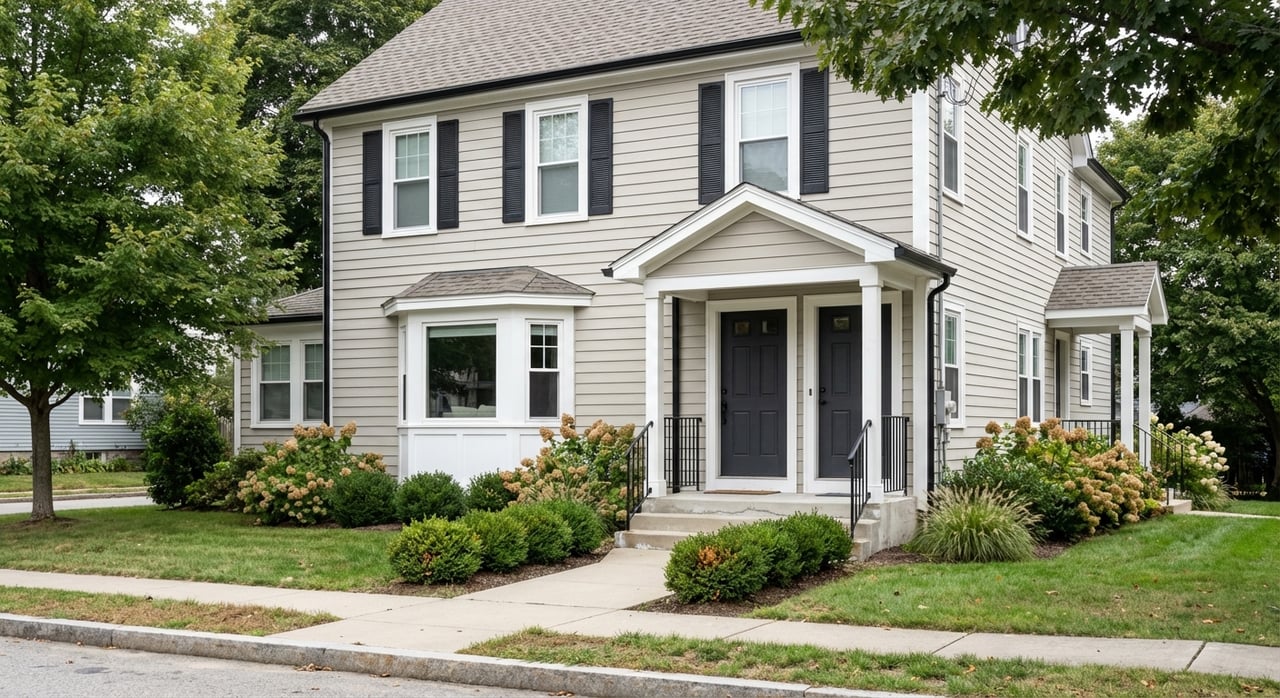
- Duplex or two-family homes are the most common choice and a classic house-hack.
- Triplexes exist but are less common in some sections.
- Fourplexes are rarer and often price higher per building, sometimes lowering the per-door entry cost.
Based on recent market activity, you’ll often find duplexes in the roughly $500,000 to $900,000 range. Triplexes and fourplexes frequently start around the low $700,000s and can approach or exceed $800,000 to $1 million depending on condition, legal unit count, and rent potential. Exact pricing varies by neighborhood, building updates, parking, and whether utilities are separate.
Quick math to screen deals
Use a simple back-of-the-envelope approach before you tour.
Gather current gross monthly rents. If units are vacant or under market, use realistic comps and cross-check with RentCafe’s Clifton averages.
Compute annual gross rent: total monthly rents times 12.
Find GRM: purchase price divided by annual gross rent. A lower GRM often means better relative income, but always test expenses.
Estimate NOI and cap rate: subtract taxes, insurance, maintenance, management, and any landlord-paid utilities to get NOI, then divide NOI by purchase price.
Example: Assume a two-unit listed around $749,000 with both units near $2,500 per month. Annual gross rent is about $60,000, so the GRM is roughly 12.5. If operating costs run about 40 to 50 percent of gross, NOI might be $30,000 to $36,000, implying a cap rate near 4 to 5 percent. This is why financing terms and accurate tax modeling are key in North Jersey.
Financing options for house-hackers
Owner-occupant buyers often use FHA for 1 to 4 units. The FHA 203(k) program can combine purchase and renovation financing, which helps when a unit needs updates. Confirm current FHA loan limits and any lender overlays for Passaic County. Conventional owner-occupied loans are also common for 2 to 4 units if you have the down payment and credit profile.
Pro tip: Ask lenders to model scenarios with higher taxes, slightly lower rents, and realistic maintenance reserves. The tighter the stress test, the better your bid strategy.
Local rules to know in Clifton
Clifton actively enforces zoning and housing standards. Before you make an offer, confirm legal unit count and whether a dwelling certificate or certificate of occupancy is current. Start with the City of Clifton Zoning Department.
Review the municipal code for permitted uses, parking, and any recent ordinances, including rules on short-term rentals. You can browse the zoning code (Chapter 461) on the Clifton municipal code portal. If you see a basement or attic unit, or a layout that looks like a conversion, expect extra scrutiny and potentially a variance.
Landlord basics in New Jersey
If you plan to live in one unit and rent the others, learn New Jersey’s deposit and disclosure rules early. The state Security Deposit statute sets limits on the amount, where deposits must be held, required notices, and time frames for returns with itemized statements. Review the law at New Jersey’s security deposit statute. Noncompliance can be costly, so set up proper accounts and templates before you take your first application.
Taxes and operating costs
Property taxes are a major line item in Clifton. Sample listings and sales in recent years show taxes often fall in the roughly $7,000 to $16,000 plus range per year depending on assessed value. Pull the last 2 to 3 years of actual tax bills and verify any pending reassessments. Include realistic insurance, maintenance, reserves for roof or boiler replacement, and any landlord-paid utilities to keep your pro forma conservative.
Due diligence checklist
Use this quick list before making an offer:
- Confirm legal unit count and obtain the dwelling certificate or CO from Clifton Zoning/Housing.
- Collect the last 12 months of rent roll with lease terms, deposits, and expirations.
- Verify if utilities and meters are separate. If not, model cost-sharing or an allowance.
- Order a full inspection covering roof, plumbing, HVAC, electrical, and structure.
- Check for lead-based paint disclosures if built before 1978, and follow federal and local rules.
- Model vacancy, management, maintenance, and capital reserves conservatively.
- Verify parking and any zoning limits. Clifton code enforcement is active, so plan for required permits.
Risks and red flags
- Unpermitted or nonconforming units with no CO or dwelling certificate.
- Single-metered utilities that make it hard to allocate costs fairly.
- Major deferred maintenance, such as an aging roof or boiler, without firm contractor bids.
- Unusually high taxes or pending assessments that erode cash flow.
Smart next steps
- Call Clifton Zoning/Housing to verify the legal unit count and current certificates.
- Speak with a lender who understands 2 to 4 unit owner-occupied financing, including FHA 203(k). Ask them to run stress tests on taxes and rates.
- Schedule an inspection and obtain repair estimates for any visible deferred items.
- Pull three recent, similar multi-family comps and build pessimistic, base, and optimistic scenarios for rent and expenses.
If you want local guidance on neighborhoods, pricing, and rent positioning, we’re here to help. Reach out to discuss your goals, walk through current listings, and map a financing plan that fits your timeline. Connect with Nicholas Salemme to get started.
FAQs
What is a typical duplex price range in Clifton?
- Many duplexes trade roughly between $500,000 and $900,000, with exact pricing driven by location, condition, legal unit status, parking, and current or projected rents.
How much rent can I expect for a 2-bedroom unit in Clifton?
- A quick benchmark shows averages in the low to mid $2,000s per month, with RentCafe’s Clifton trends recently around $2,199. Always confirm unit-level comps before you bid.
Can I use FHA 203(k) to buy and renovate a duplex I’ll live in?
- Yes, FHA’s 203(k) program supports owner-occupied 1 to 4 unit properties and can finance renovations. Review details and limits at HUD’s 203(k) page and confirm specifics with your lender.
What permits or certificates does Clifton require before renting units?
- Clifton enforces zoning and housing codes and requires proper certificates to confirm legal unit count. Start with the Clifton Zoning Department to verify current status and any needed approvals.
What are New Jersey’s rules for security deposits?
- New Jersey caps security deposits and requires holding them in specific accounts, providing annual notices, and returning them on time with an itemized statement. See the statute at N.J.S.A. 46:8-19 et seq..